
How to Plan a Custom Cabinet Budget Without Losing Control?
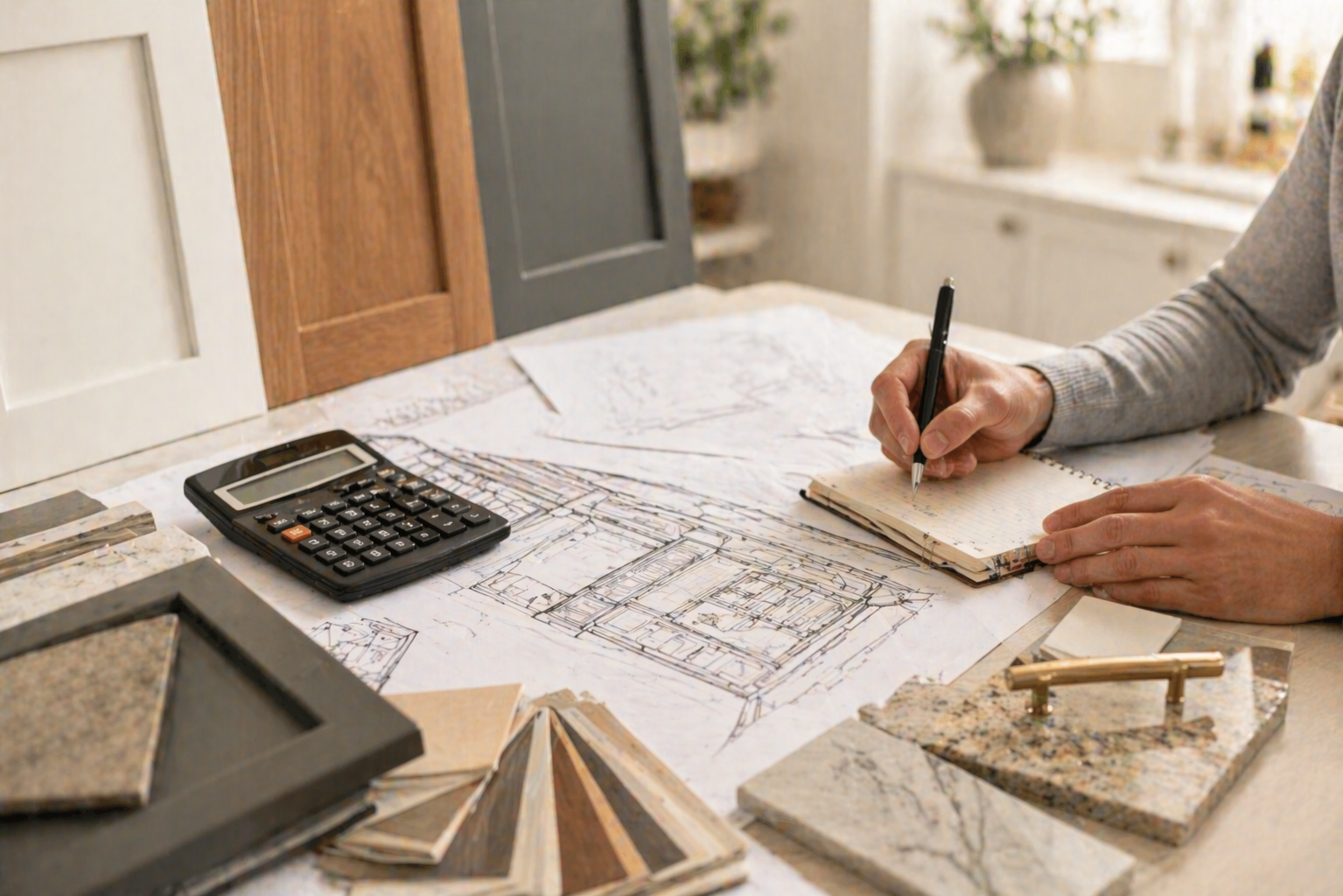
A cabinet budget can shift quickly once the real decisions begin. What started as a simple idea becomes a discussion about layout changes, storage priorities, material choices, finish upgrades, and site conditions that were not obvious at the beginning. That is why budgeting for custom cabinetry should never start with a random number. It should start with the room, the goals, and the level of finish you want the space to have.
One of the first things to understand is that cabinetry cost is shaped by more than size alone. A small vanity, a full kitchen, and a built-in storage wall may all seem similar at a glance, but the amount of planning and fabrication behind each one can be very different. Corners, appliance integration, tall storage, specialty drawers, and trim details all affect the final scope. Once the space becomes more tailored, the budget has to reflect that level of work.
A smart cabinet budget usually begins by separating the project into categories. Core cabinetry covers the essential build, design, and installation. Finish upgrades include things like paint or stain work, decorative panels, built-in accessories, or more refined detailing. It is also wise to leave room for contingency because existing homes often reveal small surprises once measurements, floors, plumbing, or wall conditions are fully accounted for. That extra room in the budget can protect the project from unnecessary stress later.
Priorities matter just as much as the total number. It is easy to want every upgrade when you are looking at samples and inspiration photos, but not every feature carries the same value in daily life. In some rooms, better drawer construction and stronger internal storage will matter more than decorative extras. In other rooms, a cleaner finish or a more refined profile may be the right place to spend. The best budget is the one that supports how the room will actually be used.
It also helps to understand where trade-offs are reasonable. You may choose a simpler door style so you can invest more in storage features. You may keep certain secondary areas more restrained so the main space can be done well. You may also decide that some upgrades are worth phasing later instead of trying to force everything into one phase. A well-planned budget is not about saying yes to everything. It is about making the right choices in the right places.
Another part of budgeting well is getting specific early. Appliance sizes, room dimensions, finish direction, and storage needs all affect the accuracy of the estimate. Vague planning usually leads to vague numbers, and vague numbers tend to grow. When the project is clearly defined from the beginning, it becomes much easier to protect both the design and the budget without losing momentum along the way.
At Trailblazer Woodworks, budgeting is treated as part of the planning process, not just a line item to fill in later. The goal is to help clients make informed decisions that support both the look and performance of the cabinetry. A strong budget should give the project direction, not limitation. When it is built thoughtfully, it becomes the foundation for a finished space that feels intentional, useful, and worth the investment.
