
Choosing the Right Wood Species for Custom Cabinetry
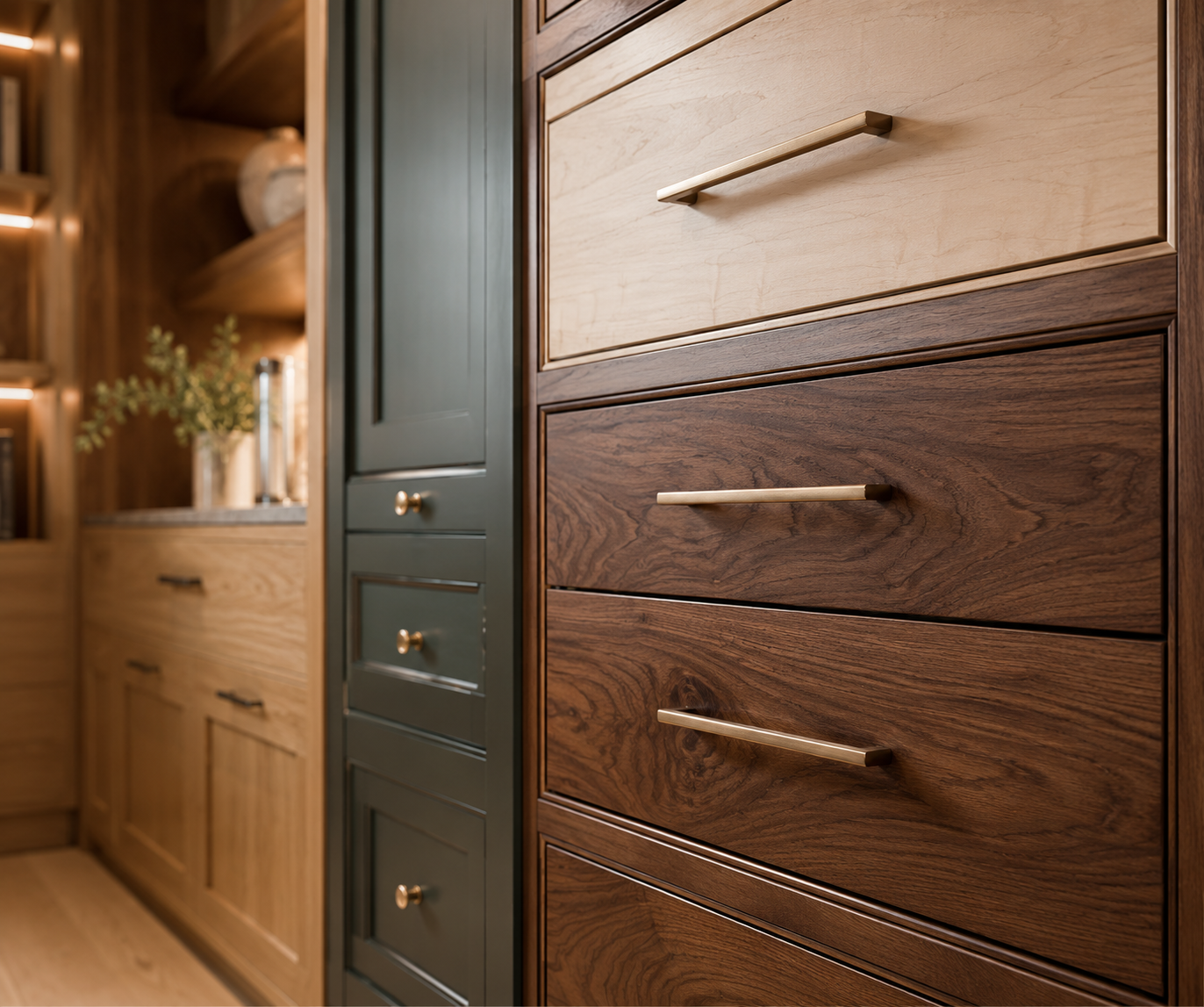
Every cabinetry project begins with a decision that shapes everything that follows: the wood species. It influences color, grain pattern, durability, and how the finished piece will age over the next twenty or thirty years. Homeowners often focus first on color and finish options, but the species underneath that finish determines how the cabinetry performs and how it ages, which makes this one of the most consequential early choices in any custom build.
Maple is among the most popular choices for painted cabinetry because of its tight, even grain and smooth surface that takes paint exceptionally well. It is a hard, durable wood that resists dents and wear, making it well suited for high-traffic kitchens where cabinetry takes daily abuse. Because its grain is subtle rather than pronounced, maple creates a clean, uniform look that works particularly well in contemporary and transitional designs.
Oak, by contrast, brings pronounced grain character that many homeowners specifically seek out for a more traditional or rustic aesthetic. Its open grain pattern is visible even under stain, giving cabinetry a textured, organic quality that painted finishes simply cannot replicate. Oak is also exceptionally strong and durable, which has made it a long-standing favorite for cabinetry meant to last generations.
Cherry offers a different appeal entirely, prized for the way its color deepens and warms with age and light exposure. A cherry kitchen installed today will look noticeably different, and many would argue more beautiful, a decade from now as the wood develops its characteristic patina. This aging process is worth discussing upfront with any homeowner considering cherry, since it is a feature of the wood rather than something to be corrected.
Walnut has become increasingly popular in modern and high-end cabinetry for its rich, dark tones and smooth grain. It pairs particularly well with the kind of clean, minimalist design language found in contemporary kitchens, and its natural color often eliminates the need for heavy staining to achieve a sophisticated, upscale look. Walnut tends to command a premium price point, reflecting both its appearance and its more limited availability compared to species like maple or oak.
Beyond aesthetics, practical factors like budget, regional climate, and intended use should inform the final species selection. Softer woods may not hold up as well in households with heavy daily use, while certain species respond better to humidity fluctuations common in different parts of the country. A knowledgeable cabinetry partner should walk through these tradeoffs rather than defaulting to whichever species is easiest to source.
At Trailblazer Woodworks, species selection is treated as a foundational design conversation, not a checkbox. Matching the right wood to a homeowner's aesthetic goals, budget, and lifestyle ensures the cabinetry not only looks right on installation day but continues to perform and age beautifully for decades to come.
