
Designing a Home Bar or Beverage Center with Custom Cabinetry
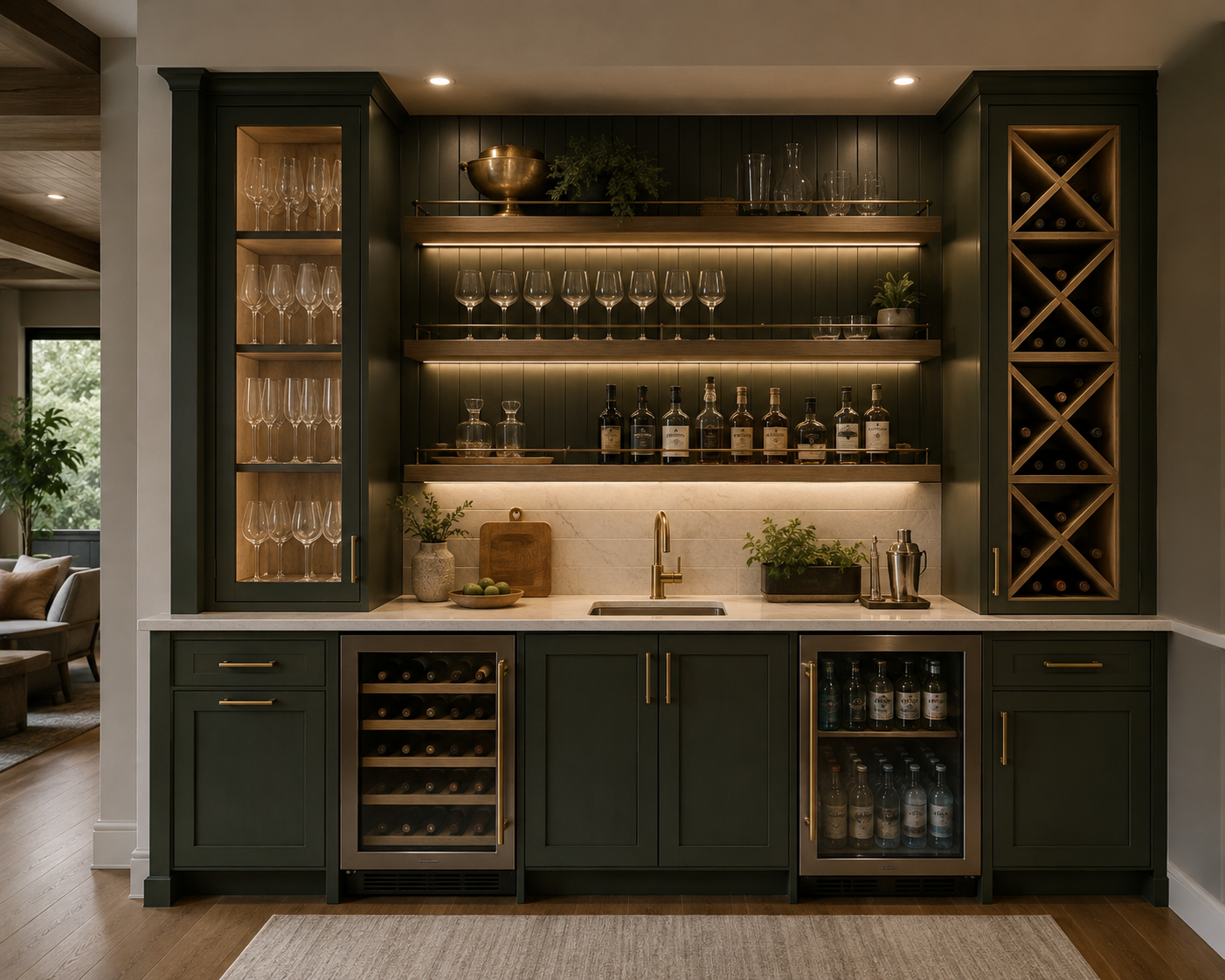
The dedicated home bar has evolved from a luxury feature found only in the largest custom homes into one of the most requested additions across a broad range of residential renovation projects. What was once a wet bar tucked into a corner of a basement has become a thoughtfully designed, prominently positioned entertaining space that receives the same design attention as any other room in the home. Custom cabinetry is what makes the difference between a beverage area that looks like an afterthought and one that functions as a genuine focal point of the home's entertaining experience, combining storage, display, and workspace in a configuration tailored to how each household actually hosts.
Layout and zoning are the foundational decisions in any home bar or beverage center design, and they need to be established before any cabinetry configuration is finalized. A functional bar layout separates the primary work zone, where drinks are prepared and poured, from the storage zones for glassware, spirits, and bar tools, and from the refrigeration zone for chilled beverages, ice, and perishable mixers. When these zones overlap or compete for the same counter space, the bar becomes difficult to use efficiently during gatherings, which defeats the primary purpose of having a dedicated entertaining space in the first place.
Glassware storage is one of the most visually prominent elements of a home bar design and deserves careful planning in terms of both capacity and display quality. Open shelving with integrated lighting showcases glassware beautifully while keeping it accessible, but it requires consistent organization to look intentional rather than cluttered. Glass-front cabinetry offers a middle ground, providing the visual display quality of open shelving with the dust protection of enclosed storage, which is particularly valuable for specialty glassware used infrequently enough that dust accumulation becomes a concern between uses.
Wine storage within a custom bar or beverage center can range from a simple dedicated section of cabinetry with horizontal bottle slots to a fully integrated wine refrigeration unit built seamlessly into the cabinet run. The right approach depends on the size of the collection being stored and whether the storage is primarily for short-term accessibility or longer-term aging. A household that keeps a rotating selection of a few dozen bottles for regular consumption has very different storage needs than one managing a larger collection across multiple varietals and vintages, and the cabinetry configuration should reflect those specific needs rather than defaulting to a generic wine rack insert.
Counter surface selection in a home bar carries both aesthetic and functional implications specific to the way bar surfaces are used. Bar tops are subject to consistent moisture exposure from condensation, spills, and wet glassware, which makes surface material selection and proper sealing critical to long-term performance. Quartz and porcelain surfaces offer the strongest moisture resistance with minimal maintenance requirements, while natural stone options like marble bring a luxurious aesthetic that requires more diligent sealing and care to prevent staining. A waterfall edge detail on the bar counter, where the countertop material continues vertically down the side of the cabinet, creates a dramatic visual statement that reinforces the bar as a distinct design moment within the broader room.
Lighting within and around a home bar cabinetry system plays an outsized role in establishing the atmosphere of the space, particularly during evening entertaining when the bar becomes the social focal point of the room. Under-cabinet lighting illuminates the counter workspace for practical use, while interior cabinet lighting highlighting glassware or spirit bottles creates the warm, ambient glow that makes a bar feel genuinely inviting rather than simply functional. LED strip lighting in a warm color temperature, integrated into the cabinetry design from the beginning rather than added as an afterthought, produces the most polished and intentional result.
At Trailblazer Woodworks, home bar and beverage center projects are designed around the specific entertaining style and storage needs of each household, because a bar that fits the way a family actually hosts will always outperform a generic configuration pulled from a design catalog. Whether the project is a compact beverage center integrated into a kitchen layout or a fully dedicated bar room with custom millwork throughout, the goal is a space that combines function and atmosphere in a way that makes every gathering feel effortlessly well-hosted.
