
How to Choose the Right Countertop Material to Complement Your Custom Cabinetry
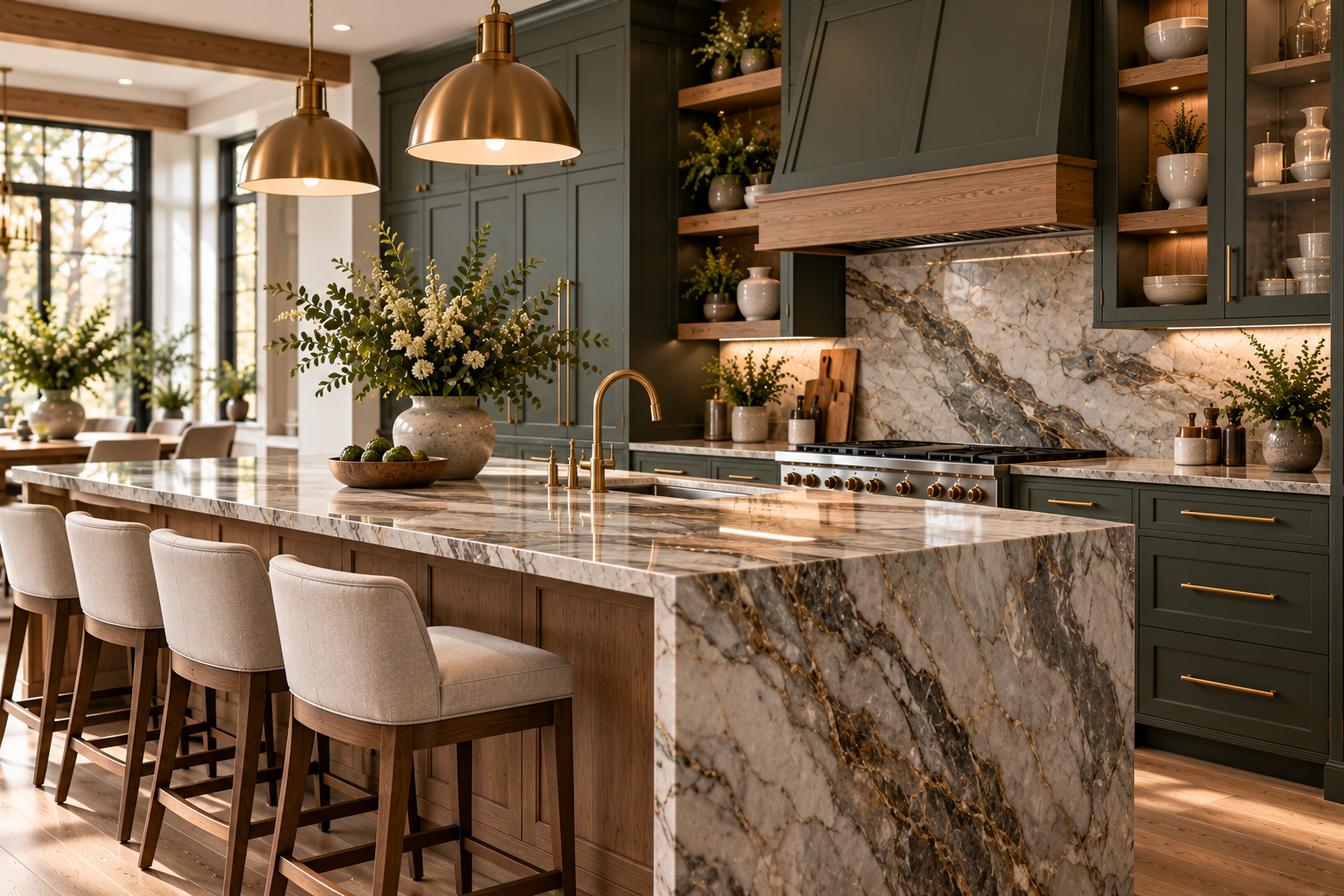
Countertop selection is one of the most consequential material decisions in a kitchen or bathroom project, sitting at the intersection of daily function, visual design, and long-term maintenance commitment in a way that few other single choices do. The countertop surface is where food is prepared, where hands rest during conversation, where spills happen and cleanup follows, and where the eye lands when taking in the kitchen as a whole. Getting the material right means understanding not just which surface looks beautiful alongside the cabinetry but which one will continue to look beautiful and perform reliably under the specific conditions of the household using it every day.
Quartz engineered stone has become one of the most widely specified countertop materials in residential cabinetry projects for reasons that are straightforwardly practical as much as aesthetic. Its non-porous surface requires no sealing, resists staining from the kinds of substances that kitchens and bathrooms encounter daily, and is available in a range of colors and patterns that can complement virtually any cabinetry finish from bright white painted cabinetry to rich dark wood tones. The consistency of quartz patterning, which can be precisely matched across multiple slabs, is a practical advantage in large kitchens where several slabs are needed and visual continuity across seams matters. Its primary limitation is heat resistance, since quartz can be damaged by direct contact with very hot cookware in a way that natural stone alternatives handle more readily.
Granite remains one of the most proven natural stone countertop materials available, valued for its heat resistance, scratch resistance, and the genuinely unique character that comes from each slab being a one-of-a-kind natural material. The movement, veining, and color variation in a granite slab paired with painted cabinetry or natural wood tones creates a material richness that engineered alternatives approximate but never fully replicate. Granite does require periodic sealing to maintain its stain resistance, and the variation inherent in natural stone means that the specific slab selected in a showroom needs to be evaluated carefully in relationship to the cabinetry samples rather than relying on generic color descriptions.
Marble brings a level of visual sophistication to countertop selection that no other material quite matches, with its distinctive veining and luminous surface quality creating a countertop that reads as a design statement as much as a work surface. The tradeoff is well documented: marble is porous, susceptible to etching from acidic substances like lemon juice and vinegar, and requires more careful maintenance than virtually any other countertop material commonly used in residential kitchens. Homeowners who love marble and are willing to accept its maintenance demands and the patina it develops over time find it deeply rewarding, while those who want a low-maintenance surface that holds its appearance without careful management are better served by alternative materials that deliver a similar aesthetic with less ongoing commitment.
Butcher block countertops introduce a warmth and organic quality to kitchen surfaces that stone and engineered materials cannot match, making them a natural complement to cabinetry with strong wood character or to painted cabinetry where a warm material contrast is part of the design intent. Butcher block works particularly well as an island surface paired with stone perimeter countertops, creating a material variation that distinguishes the island as a distinct element within the kitchen while adding a tactile warmth to the primary prep surface. Wood countertops require regular oiling to maintain their moisture resistance and will develop cutting marks and surface character over time that some homeowners find appealing as a sign of a well-used kitchen and others find unsatisfying compared to the more uniform appearance of stone surfaces.
Porcelain slab is one of the more recent additions to the premium countertop category and one of the most technically impressive in terms of its combination of durability and aesthetic range. Large-format porcelain slabs can be produced in patterns that closely mimic the appearance of marble, granite, and other natural stones with the practical advantage of a surface that is harder, more scratch-resistant, more heat-resistant, and requires no sealing. The full-height backsplash application, where the same porcelain slab continues from the countertop surface up the wall in a single uninterrupted material run, is one of the most compelling visual treatments available in contemporary kitchen design and one that porcelain’s large-format production capability makes uniquely achievable.
At Trailblazer Woodworks, countertop material selection is part of the cabinetry design conversation from the beginning rather than a parallel decision made independently with a separate supplier, because the relationship between the countertop surface and the cabinetry color, edge profile, and overall design composition is too important to leave to chance. The right countertop paired with the right cabinetry creates a kitchen where every material choice feels resolved and intentional, and that sense of cohesion is one of the most enduring qualities a well-designed kitchen can have.
