
Plywood vs MDF: Which Cabinet Box Material Is Better?
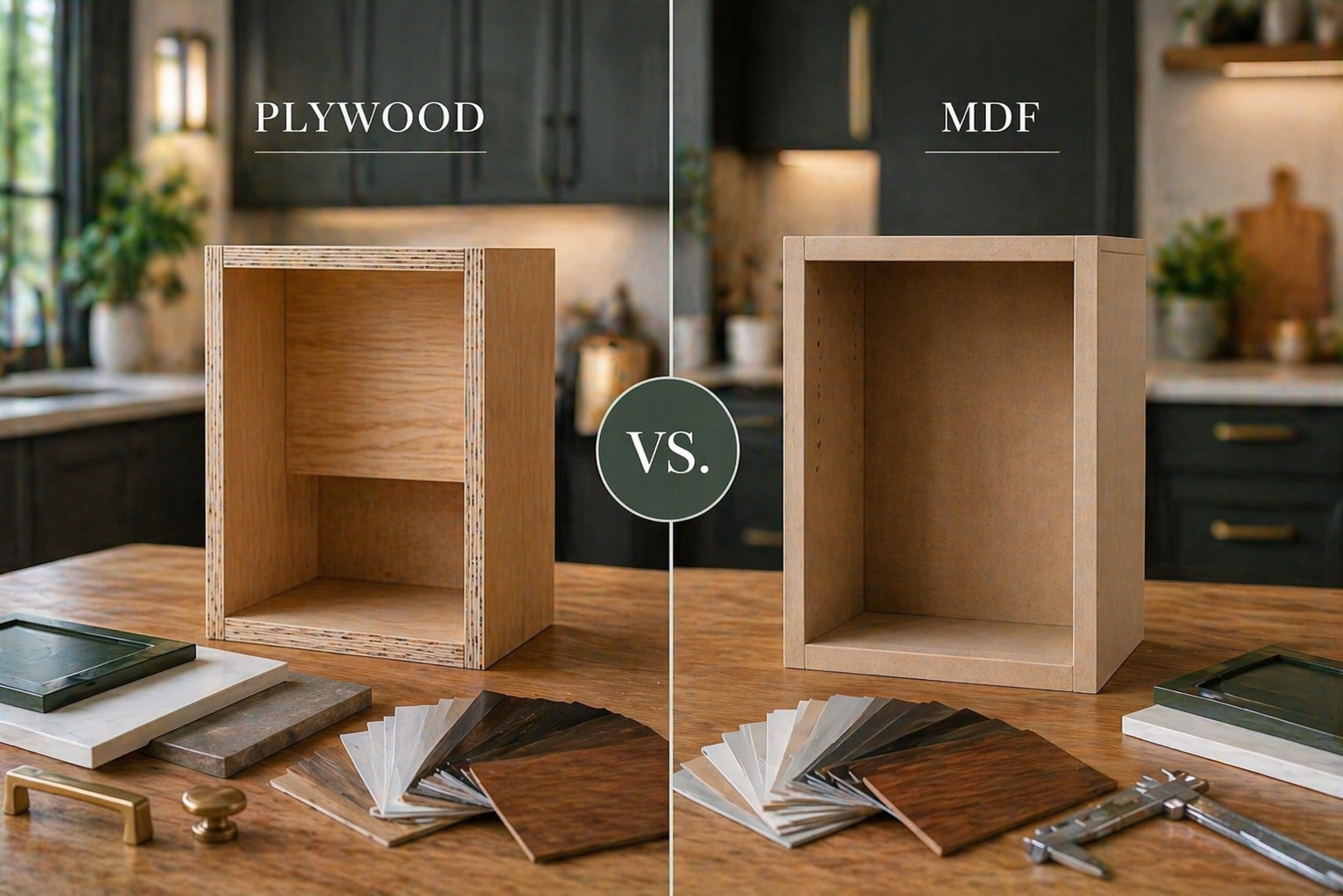
If you are investing in custom cabinets, the box matters just as much as the door style. Homeowners often focus on paint color, hardware, or the look of a shaker front, then realize the real durability question starts behind the door. That is where the choice between plywood and MDF cabinet boxes becomes worth a closer look. The difference is not just technical. It affects how the cabinetry handles weight, moisture, fastening, and daily use over time.
Plywood and MDF are both common materials, but they perform very differently once installed in a home. Plywood is made from thin layers of wood veneer laminated together in alternating directions, which gives it strength and stability. MDF, or medium-density fiberboard, is made from wood fibers and resin pressed into dense panels. Both can be used in cabinetry, but they do not behave the same way when exposed to real conditions like humidity, heavy storage, and repeated use.
For cabinet boxes, plywood is often the stronger all-around choice. It tends to hold screws better, handle weight more reliably, and resist warping better than many lower-cost panel products. That makes it a practical option for kitchens, bathroom vanities, pantry units, and built-ins that need to perform day after day. In spaces where cabinet interiors are carrying dishes, cookware, or other heavy items, that extra structural strength matters more than most homeowners realize.
MDF still has a place, but it is usually better suited to specific applications rather than as the default box material. Because it has a smooth, uniform surface, MDF can paint beautifully and work well for certain visible components, trim details, and lower-stress pieces. In dry environments or decorative elements where appearance is the priority and structural demands are lighter, MDF may be a reasonable option. The issue comes when it is used in places that need more protection from weight, movement, and moisture.
Moisture is one of the biggest reasons many cabinet makers lean toward plywood for box construction. Kitchens and bathrooms naturally expose cabinetry to steam, spills, humidity, and plumbing-related risks. Plywood generally handles those conditions better than MDF, which is more prone to swelling if water gets into the panel. Once MDF is damaged by moisture, it is far less forgiving. That is why the room matters so much when choosing the right material.
Cost also comes into the conversation, and it should. MDF can be less expensive up front, which may seem appealing during a renovation. But cabinet value is not just about initial price. It is about how the material performs in the exact room it is being used in. For long-term projects, many homeowners decide the cabinet box is not the place they want to compromise, especially if the rest of the renovation is already being built to a higher standard.
At Trailblazer Woodworks, material selection is approached as part of the overall design and performance strategy. The goal is not to force one material into every situation, but to choose the option that best fits the room, the use, and the expected lifespan of the project. When the cabinet box is built with the right material from the start, the result feels more solid, more dependable, and better suited to the way people actually live.
