
Floor-to-Ceiling Cabinetry: Making the Most of Vertical Space
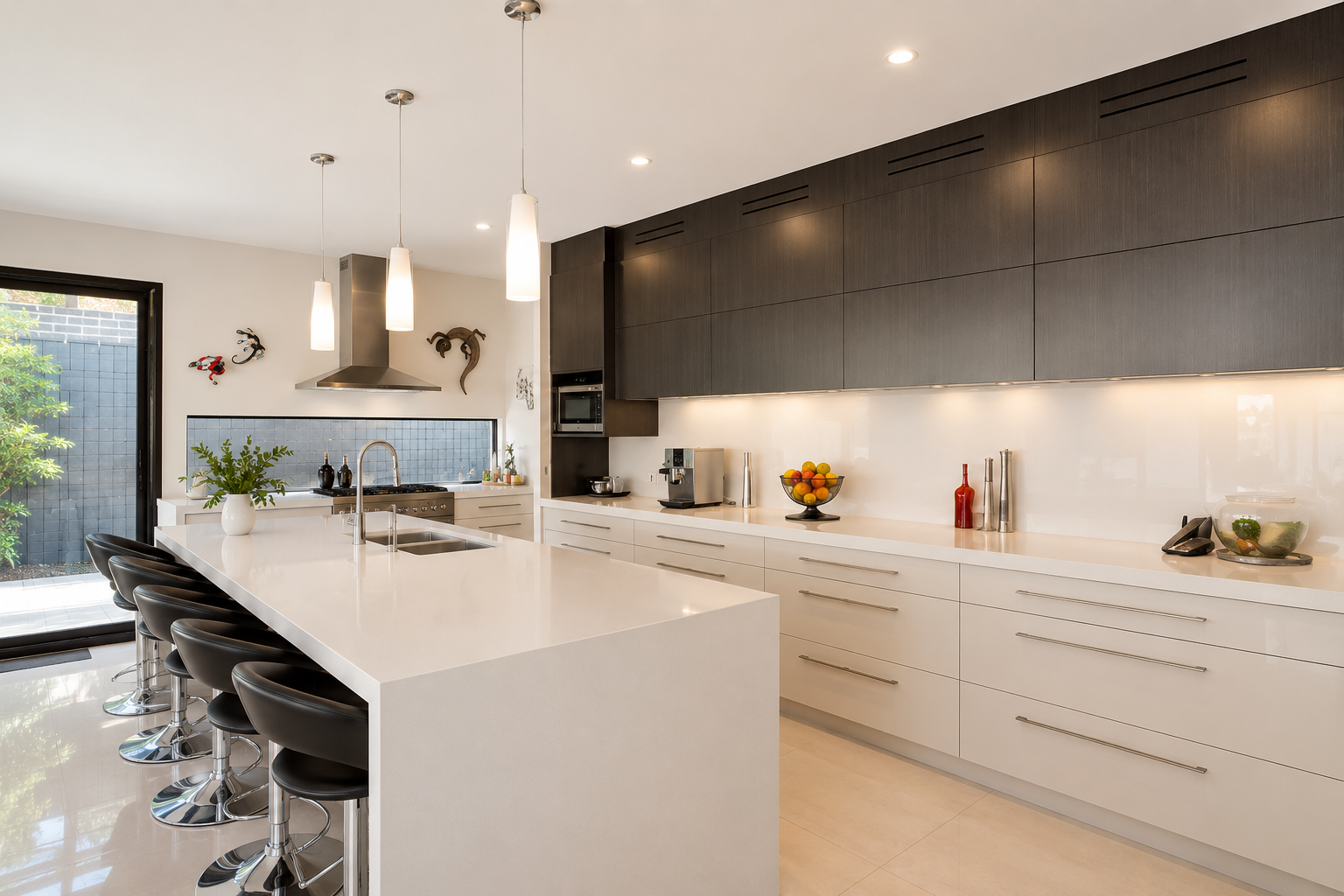
Most kitchens and storage rooms stop their cabinetry well short of the ceiling, leaving a gap of dead air above the upper cabinets that collects dust instead of doing anything useful. Floor-to-ceiling cabinetry closes that gap entirely, extending storage and visual continuity all the way up. It is one of the simplest design shifts that can transform a room without changing its footprint at all.
The most obvious advantage is storage capacity. A standard upper cabinet might leave eighteen inches or more of unused space between its top and the ceiling. Extending cabinetry to full height reclaims that space for seasonal items, large serving pieces, or anything used infrequently enough to live up high. In a kitchen where counter and lower cabinet space is already stretched thin, that additional volume can solve a storage problem without expanding the room.
Beyond function, floor-to-ceiling cabinetry changes the proportions of a space in a way that feels intentional and architectural. A kitchen with cabinets that stop short can look unfinished, almost like a placeholder for something larger. Carrying the cabinetry to the ceiling creates a sense of permanence and built-in quality, as though the room was designed around the cabinetry rather than the cabinetry added into the room afterward.
This approach also simplifies maintenance in a way homeowners often do not anticipate until after the fact. That open gap above standard upper cabinets is notorious for collecting grease, dust, and clutter that nobody wants to clean. Eliminating the gap eliminates the problem, which is a small but meaningful quality-of-life improvement for anyone who has ever climbed on a step stool with a vacuum attachment to deal with it.
Ceiling height and room proportion play a role in how this style is best executed. In rooms with standard eight-foot ceilings, floor-to-ceiling cabinetry can make the space feel taller and more considered. In rooms with higher ceilings, it is common to split the upper sections, using the topmost area for less frequently accessed storage while keeping the most usable cabinetry within comfortable reach. Either way, the design should be planned around how the homeowner actually uses the space, not just the available wall height.
Lighting deserves consideration as well. Tall cabinetry can make a kitchen feel more closed in if the lighting plan does not account for the added vertical mass. Under-cabinet lighting, glass-front upper sections, or strategic open shelving breaks built into the run can keep the space feeling bright and balanced rather than heavy.
At Trailblazer Woodworks, floor-to-ceiling cabinetry is designed as a full system, not just taller boxes stacked on top of standard cabinets. Every detail, from reach and ladder access to finish continuity at the crown, is planned so the result looks architecturally complete and functions exactly the way the homeowner needs it to, year after year.
