
Vanity Cabinet Sizing Guide for Better Fit
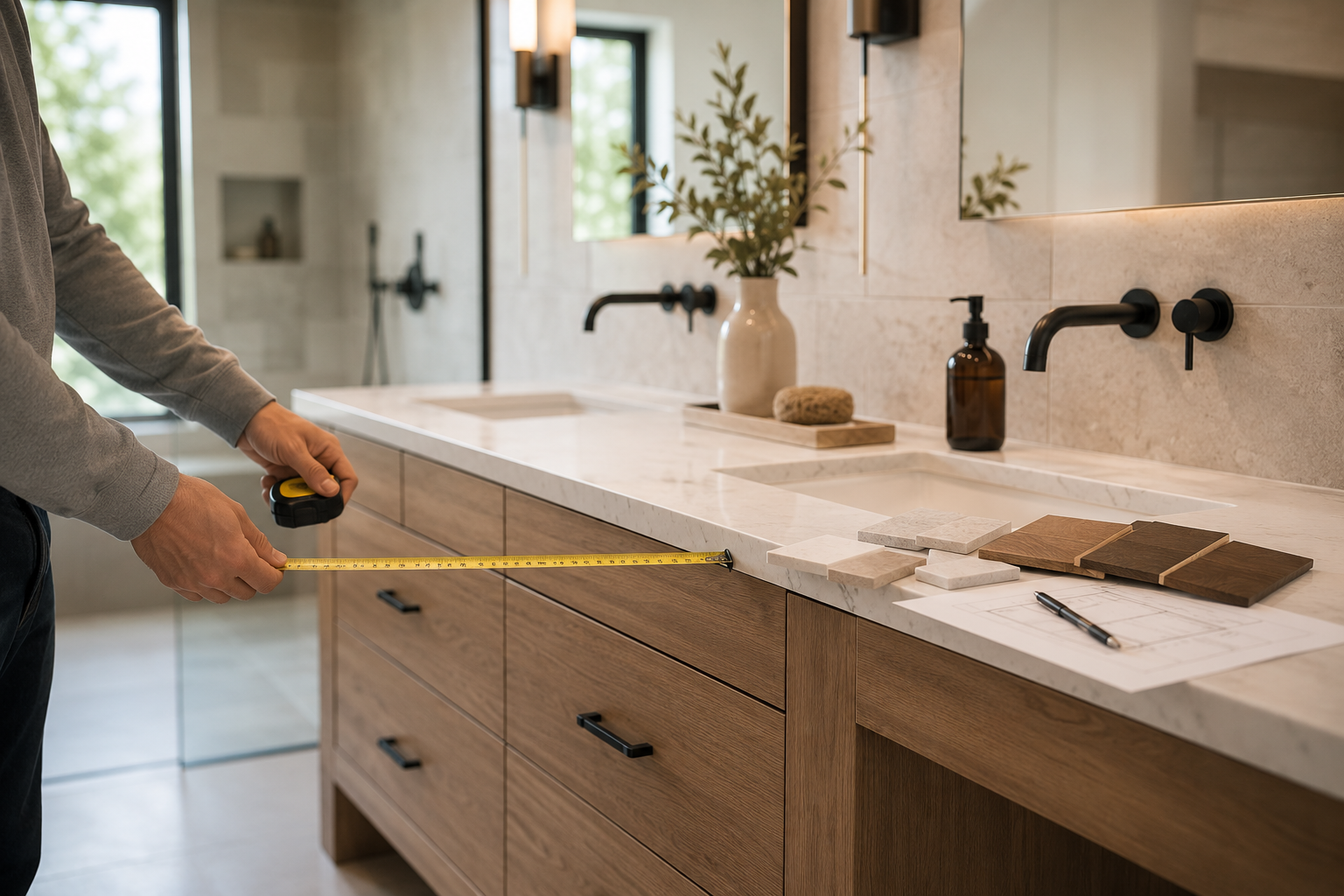
A bathroom vanity can look perfect in a showroom and still feel wrong once it lands in your space. That usually comes down to size. A good vanity cabinet sizing guide helps you avoid the two mistakes homeowners regret most: choosing a cabinet that crowds the room or one that leaves storage and visual impact on the table.
If you are planning a bathroom update, vanity size should be decided early, not after finishes and fixtures are already picked. The cabinet sets the footprint, affects plumbing locations, shapes traffic flow, and determines how much daily storage you actually gain. Getting those dimensions right makes the rest of the room easier to plan.
Why vanity sizing matters more than most homeowners expect comes down to how hard the cabinet works every day. A vanity needs to fit the room, support the sink style, provide practical storage, and still feel comfortable to use. That means sizing is not just about finding something that physically fits between two walls.
A vanity that is too wide can make a small bathroom feel cramped and awkward. One that is too shallow may preserve floor space but sacrifice usable storage and counter function. Height matters just as much. A vanity that sits too low can feel dated and uncomfortable, while one that is too tall may not suit every user in the home.
This is where custom cabinetry has a clear advantage. Standard widths and depths work in many bathrooms, but not all. If your room has an unusual layout, a tight alcove, off-center plumbing, or you want a stronger built-in look, made-to-order sizing gives you a better result than forcing the room to adapt to stock dimensions.
The core of any vanity cabinet sizing guide comes down to width, depth, and height. Those three measurements shape how the vanity works and how the room feels. Width affects storage and presence, depth affects circulation and usability, and height affects comfort and proportion.
When sizing a vanity for your bathroom layout, it helps to look at the whole room instead of just the cabinet opening. Clearances for doors, trim, mirrors, toilets, and everyday movement all matter. A vanity should feel settled into the space, not squeezed into it, and the final layout should support both function and balance.
