
Designing an Outdoor Kitchen That Handles the Elements Without Sacrificing Style
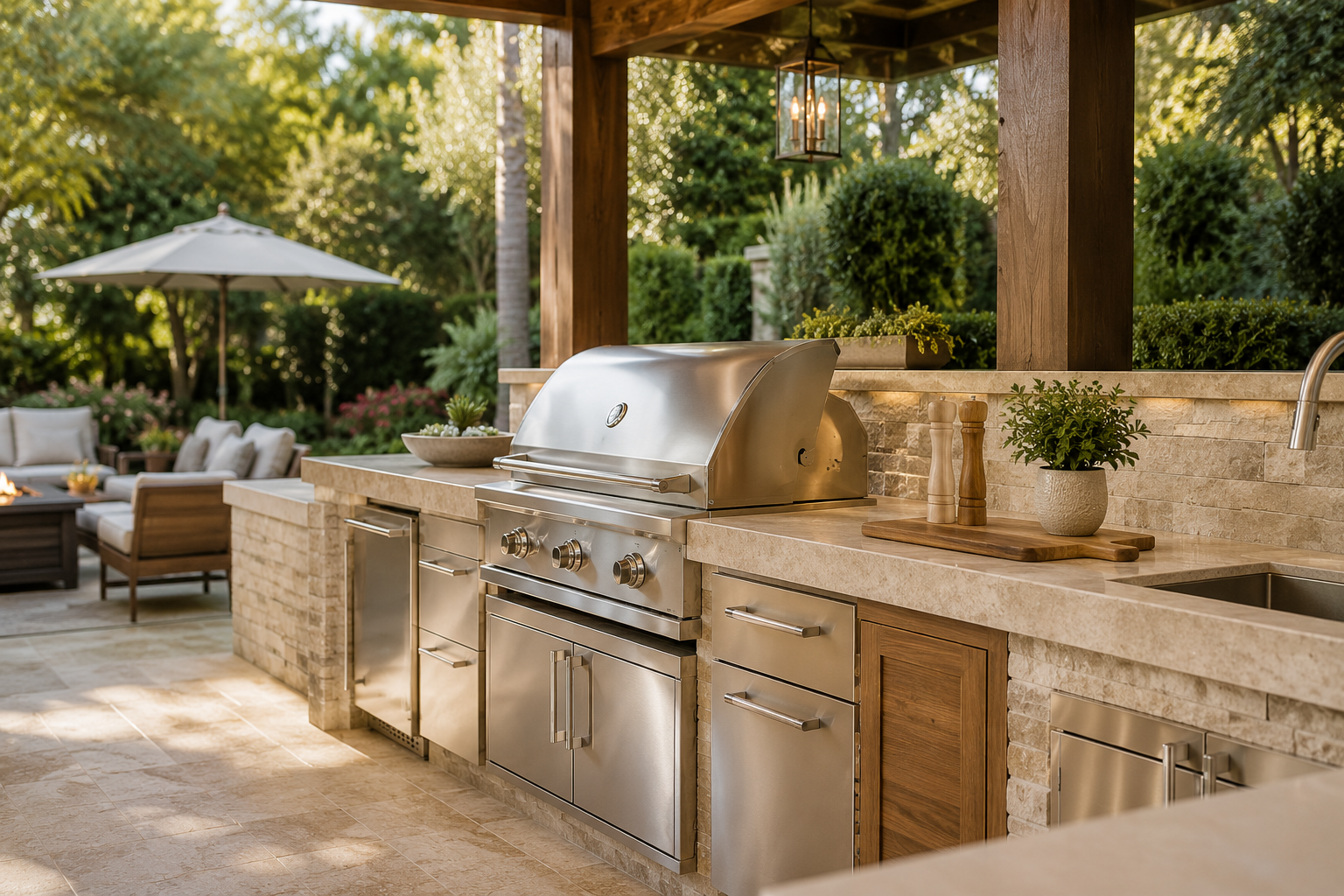
Outdoor kitchens have moved well beyond the basic built-in grill surrounded by a few feet of concrete block counter. Homeowners investing in outdoor living spaces today expect the same level of design intention and material quality on their patio or deck that they would bring to any interior room of the home. The difference is that an outdoor kitchen faces a set of demands that an interior kitchen never has to contend with: direct sun exposure, rain, temperature swings, and humidity that cycles through extremes across every season. Getting the design right means reconciling those demands with a result that looks and functions like a true extension of the home.
Material selection in an outdoor kitchen is the single most consequential decision in the entire design process, because the wrong material in an outdoor environment does not just look worn over time, it fails structurally. Stainless steel cabinetry remains the most durable option for outdoor applications, resisting moisture, heat, and corrosion in a way that wood-based cabinetry simply cannot without significant protective treatment and ongoing maintenance. For homeowners who want the warmth of a wood aesthetic outdoors, teak and similar naturally oil-rich hardwoods offer better resistance to the elements than most other species, though they still require periodic treatment to maintain their appearance over time.
Counter surface selection outdoors follows different criteria than interior kitchen planning. Granite and porcelain tile are among the most proven outdoor countertop materials, offering resistance to heat, UV fading, moisture, and the freeze-thaw cycles that crack less durable surfaces in colder climates. Concrete countertops have become increasingly popular in outdoor settings for their ability to be cast in custom shapes and their natural compatibility with an outdoor aesthetic, though proper sealing is essential to prevent staining and moisture penetration over time.
Storage planning in an outdoor kitchen needs to account for both the items used at the grill and the reality that everything stored outdoors is subject to the same environmental exposure as the cabinetry itself. Sealed cabinet interiors, drainage provisions for any moisture that does enter the cabinet, and hardware specified for marine or outdoor environments rather than standard residential applications are all details that separate an outdoor kitchen built to last from one that begins showing problems within a few seasons of installation.
The relationship between the outdoor kitchen and the interior of the home it serves deserves careful design consideration, particularly in terms of how food and supplies move between the two spaces. An outdoor kitchen positioned close to the home's interior kitchen, with a clear path between them, dramatically improves the functionality of both spaces during gatherings. Design decisions like door placement, window pass-throughs, and the orientation of the outdoor cooking zone relative to indoor prep areas all affect how naturally the two spaces work together rather than feeling like separate environments that happen to share a property.
Lighting and electrical planning outdoors requires the same early-stage integration that these systems require indoors, with the additional complexity of weatherproofing every component for exterior exposure. Task lighting above the grill and prep surfaces, ambient lighting for the surrounding seating area, and accent lighting within or beneath cabinetry all contribute to an outdoor kitchen that is as usable and inviting after dark as it is during the day. These systems need to be designed into the project from the beginning rather than added as an afterthought once the cabinetry and countertops are already in place.
At Trailblazer Woodworks, outdoor kitchen projects are approached with the same design rigor and material standards as any interior cabinetry build, with the added layer of specification knowledge required to ensure every component performs reliably through years of seasonal exposure. The result is an outdoor kitchen that looks like a natural extension of the home and functions like one as well, season after season, without the premature wear that comes from applying interior cabinetry thinking to an exterior environment.
