
Hardware Finishes Decoded: Choosing Between Matte Black, Brushed Brass, Satin Nickel, and More
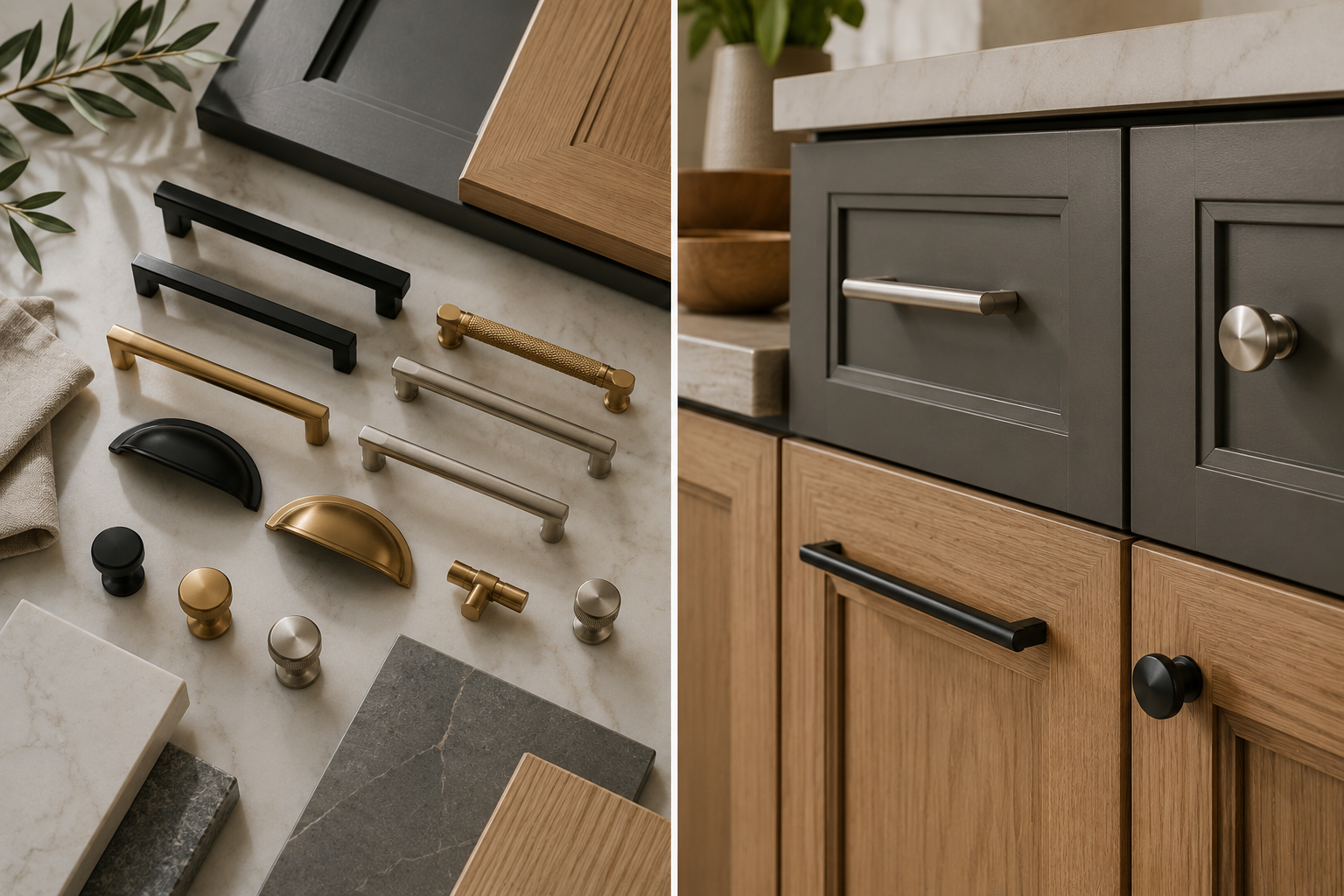
Cabinet hardware is one of the smaller line items in a cabinetry budget and one of the more disproportionately impactful design decisions in the finished room. The finish of a pull or knob is visible on every single door and drawer front in the kitchen, which means it reads as a repeating element that either ties the design together or creates visual tension with everything around it. Understanding the character of each hardware finish option, and how it interacts with cabinetry color, wood tone, and the broader design language of the home, is what allows this small decision to land with the intention it deserves.
Matte black hardware has established itself as one of the most versatile and enduring finish options in contemporary cabinetry design. Its flat, non-reflective surface reads as bold and graphic against light cabinetry colors like white and cream, while creating a grounded, intentional contrast against natural wood tones and deeper cabinetry colors like navy or forest green. Matte black is also one of the more forgiving finishes in terms of daily maintenance, since its non-reflective surface does not show fingerprints or water spots the way polished finishes do, making it a practical choice for high-use kitchens where hardware gets touched constantly throughout the day.
Brushed brass and unlacquered brass have returned to prominence in residential design after decades of association with dated builder-grade fixtures, and the current iteration of brass hardware is a significantly more refined and considered version of what came before. Brushed brass, with its warm, slightly muted gold tone, pairs particularly well with white cabinetry, warm wood species like walnut and cherry, and the earthy, organic color palettes that have become increasingly prevalent in kitchen design. Unlacquered brass develops a natural patina over time that many homeowners find appealing for the warmth and character it adds, though it requires more acceptance of surface variation than a coated finish delivers.
Satin nickel occupies a middle ground in the hardware finish spectrum that has made it one of the most consistently popular options across a wide range of kitchen styles. Its cool, slightly muted silver tone works with virtually every cabinetry color without competing for attention, and its brushed surface texture resists fingerprints and scratching better than polished chrome alternatives. Satin nickel is the hardware finish equivalent of a well-tailored neutral, capable of complementing a broad range of design directions without defining any of them too strongly, which makes it a reliable choice for homeowners who want cohesion without strong visual commitment to a particular aesthetic.
Polished chrome and polished nickel represent the more formal, reflective end of the hardware finish spectrum, bringing a level of shine and precision that suits transitional and traditional kitchens with more detailed door profiles and architectural millwork. The reflectivity of a polished finish amplifies light in a way that brushed finishes do not, which can be an asset in darker kitchens but an overwhelming element in spaces that are already bright. The practical tradeoff is maintenance: polished surfaces show fingerprints, water spots, and fine scratches far more readily than their brushed counterparts, which is worth weighing honestly against the visual appeal before committing to them across an entire kitchen.
Oil-rubbed bronze carries a distinctly different character than any of the brighter or more contemporary finish options, with its dark, slightly variegated surface suggesting age, warmth, and traditional craft in a way that suits period homes, rustic aesthetics, and kitchens with a more organic, layered design sensibility. It pairs naturally with darker cabinetry colors, aged wood finishes, and stone surfaces with strong natural veining or texture. Like unlacquered brass, oil-rubbed bronze develops variation over time as its surface coating wears at high-contact points, which reads as intentional patina in the right design context but can feel like deterioration in one where a more uniform appearance is expected.
At Trailblazer Woodworks, hardware finish selection is approached as part of the overall design conversation rather than a final afterthought, because the right finish chosen in relationship to the cabinetry color, wood tone, countertop material, and fixture selections throughout the space is what creates a kitchen that feels fully resolved from every angle. A pull or knob is a small object, but multiplied across every door and drawer in a kitchen, it becomes one of the most consistently visible elements of the entire design.
