
When to Repair and When to Replace: Making the Right Call on Aging Cabinetry
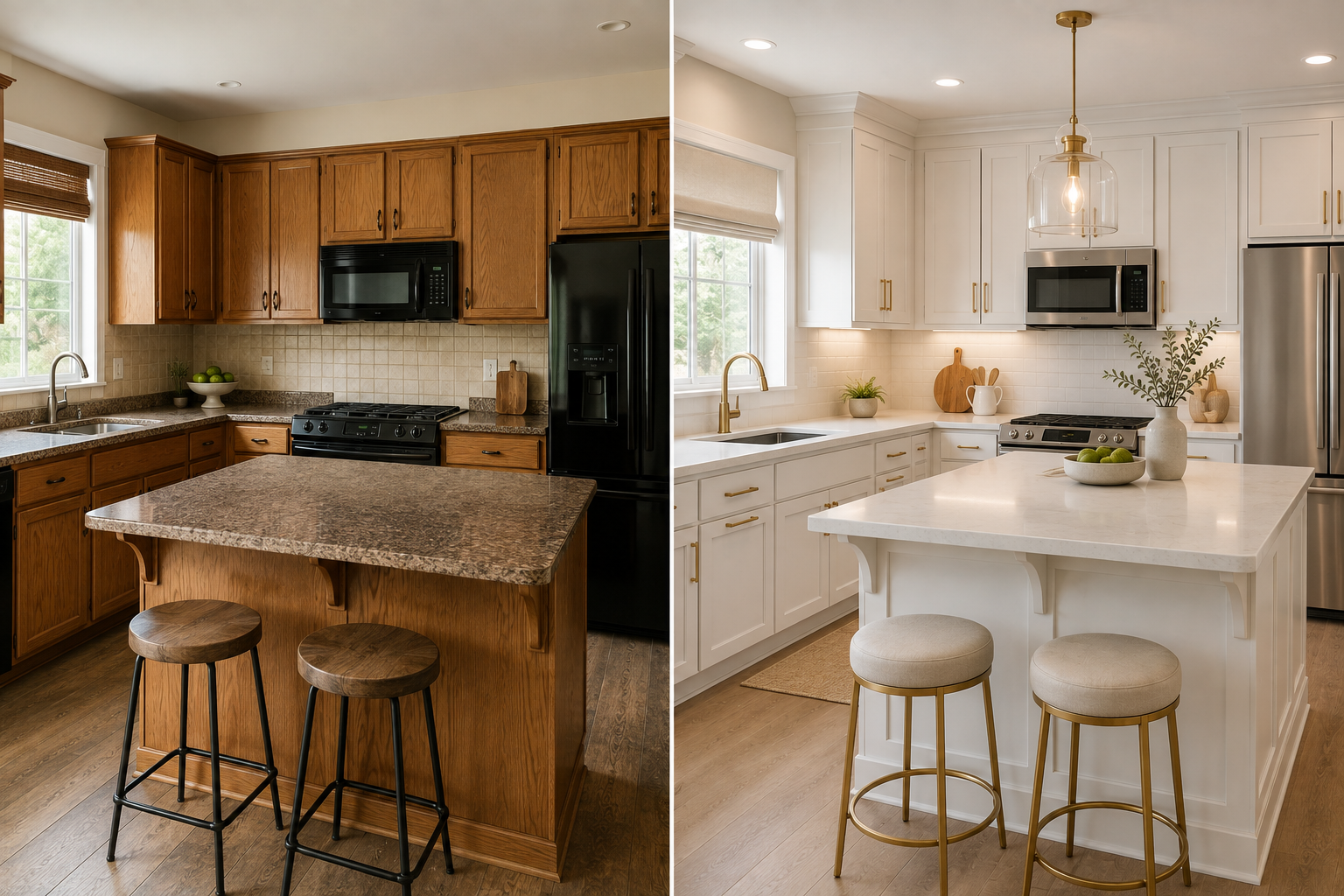
Aging cabinetry presents homeowners with one of the more genuinely complex decisions in home renovation: whether to invest in repairs, refacing, or repainting to extend the life of what exists, or whether the right answer is a full replacement that starts fresh with new construction. Neither path is universally correct, and the wrong choice in either direction carries real consequences. Replacing cabinetry that could have been successfully restored wastes a significant budget that could have gone elsewhere, while investing in cosmetic improvements on a structurally compromised cabinet system delays an inevitable replacement without solving the underlying problem.
The condition of the cabinet box is the single most important factor in evaluating whether existing cabinetry is worth preserving. A box that is structurally sound, meaning the joints are tight, the panels have not delaminated or swelled from moisture exposure, and the interior shows no signs of water damage or pest activity, is a candidate for cosmetic improvement regardless of how worn its exterior appearance may be. A box that shows evidence of structural compromise, particularly at hinge mounting points, drawer slide attachment locations, or along the bottom panel where moisture damage is most common, is unlikely to perform reliably after surface-level work and is a stronger candidate for full replacement.
Refacing is the most substantial cosmetic improvement short of full replacement, involving the application of new veneer or laminate to the exterior faces of existing cabinet boxes along with entirely new door fronts and drawer fronts. When the underlying box construction is sound and the existing layout functions well, refacing can deliver a dramatically transformed appearance at a fraction of the cost of new cabinetry. The limitation is that refacing cannot address layout problems, add storage capacity, or correct interior organization shortcomings, which means it is the right answer only when the existing layout genuinely serves the household well and the primary dissatisfaction is aesthetic rather than functional.
Repainting existing cabinetry occupies a different tier of intervention than refacing, addressing surface appearance without touching door profiles or box exteriors. A professional repaint, involving proper stripping or deglossing of the existing finish, careful surface preparation, and a high-quality applied topcoat, can restore cabinetry that has become dull, chipped, or dated in color to a finish that looks and performs comparably to new painted cabinetry. The key word is professional: a poorly executed repaint that skips surface preparation or uses inadequate finish products will begin peeling and chipping within months, which is a worse outcome than either properly painted or replaced cabinetry.
Hardware replacement is the simplest and least expensive intervention available for aging cabinetry, and it is remarkable how significantly new pulls, knobs, and hinges can change the perceived quality and modernity of an existing cabinet installation. For cabinetry that is structurally sound and recently painted or in good finish condition but feeling visually dated, hardware replacement alone can deliver a meaningful refresh without any disruption to the cabinet boxes or doors themselves. This is the logical first step before considering more involved interventions, since it costs relatively little and immediately clarifies how much of the dated appearance was attributable to hardware versus the cabinetry itself.
Full replacement becomes the clear answer when the existing layout no longer serves the household's needs, when box construction has been compromised by moisture or structural damage, or when the scope of cosmetic work required to bring the existing cabinetry to an acceptable standard approaches the cost of new construction. It is also the right choice when a homeowner's design vision has evolved beyond what the existing layout and door profile can accommodate, since cosmetic work can only transform appearance within the constraints of what already exists. A kitchen that is poorly laid out for how a household actually cooks and lives will remain poorly laid out after refacing or repainting, regardless of how good it looks.
At Trailblazer Woodworks, the repair versus replace conversation begins with an honest assessment of what the existing cabinetry can and cannot deliver after intervention, because the right recommendation is the one that serves the homeowner's long-term interests rather than simply the one that generates the largest project scope. Sometimes the best advice is a targeted repair or repaint. Sometimes it is a full replacement. The goal is always a result that performs and looks the way the homeowner needs it to for the next decade and beyond.
